News
Dübendorf ZH/Mesa – PHI Air Medical will in future train its pilots with the virtual reality (VR) flight simulation system from Swiss developer Loft Dynamics. The full-motion platform with 360-degree 3D cockpit enables immersive training that reflects the complexity of air rescue missions.
(CONNECT) A full-motion VR flight simulation system from Loft Dynamics in Dübendorf will train pilots of PHI Air Medical, one of the largest air rescue services in the USA based in Arizona, for complex missions. The Swiss provider's training platform, which is the only VR simulation worldwide to be approved for pilot training by the Federal Aviation Administration (FAA) and the European Union Aviation Safety Agency (EASA), will be used as an Airbus H125 model at the PHI base in Mesa in the future, according to a press release.
With a 360-degree 3D cockpit and functions such as Force Feedback (authentic feeling of resistance) and Six Degrees of Freedom (freedom of movement in space), the simulation prepares flight crews for landings with zero visibility, rescue missions at high altitude, night flights and variable patient loads. According to Loft Dynamics, the simulator reflects the complexity and time pressure of real rescue missions.
"This is exactly what VR is for: for people who fly complex, time-sensitive missions. PHI's introduction of VR technology demonstrates what is possible when training is no longer dependent on geography, availability or cost. This is not just a milestone for PHI - but a turning point for the entire air rescue industry in terms of the training of its pilots," Fabi Riesen, founder and CEO of Loft Dynamics, is quoted in the press release. ce/yes

PHI Air Medical trains its pilots using the VR flight simulator from Loft Dynamics. Image: Loft Dynamics AG
News
Zurich – The Albert Einstein School of Public Policy has been founded at the Swiss Federal Institute of Technology in Zurich (ETH). The modern interdisciplinary center is intended to better connect science, technology and politics and qualify decision-makers in politics and administration.
(CONNECT) On October 21, 2025, the Albert Einstein School of Public Policy was founded at the Swiss Federal Institute of Technology in Zurich (ETH). According to a report by the university, the newly created interdisciplinary center is intended to better connect science, technology and politics and to qualify decision-makers in politics and administration.
"We want to support politicians and public administration employees in making fact-based decisions that are based on the latest knowledge. We want to enter into an active dialog and provide the foundations for this," said Tobias Schmidt, ETH Professor of Energy and Technology Policy and Director of the Albert Einstein School of Public Policy, in the press release.
Employees from politics and administration at the institution will meet with those from research and teaching in various forms in order to develop joint social concepts. The newly founded center is based on the work of the Institute of Science, Technology and Policy (ISTP). The topics addressed by 70 members from 13 departments include artificial intelligence and digitalization, environmental, energy and food systems, spatial planning and the built environment, public health, business and innovation, and peace, conflict and security. Director Tobias Schmidt is supported by a management committee consisting of five people. ce/ww
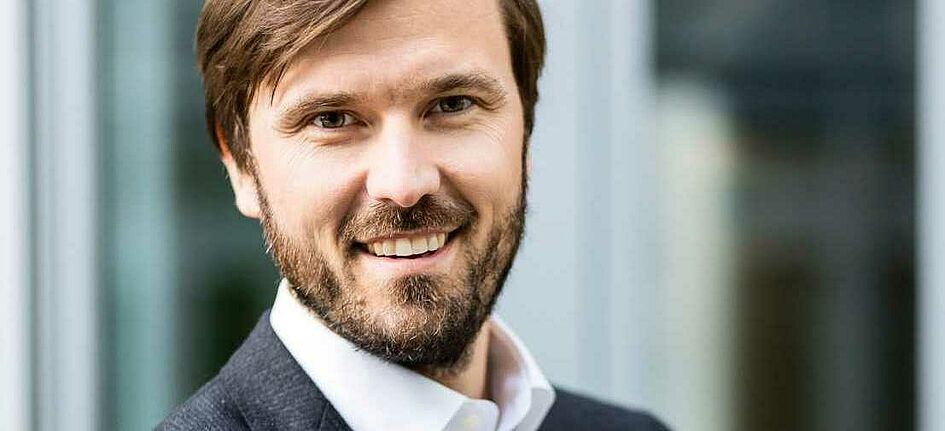
Tobias Schmidt is the director of the newly founded Albert Einstein School of Public Policy at ETH Zurich. Image: Balz Murer/ETH Zurich
News
Zurich – Elektrizitätswerk Zürich (ewz) wants to support developers and owners of real estate in reducing emissions in the building sector. The city’s own company has drawn up guidelines for this. The white paper “Net zero for real estate” is based on SIA standard 390/1.
(CONNECT) Elektrizitätswerk Zürich wants to support the real estate sector on its way to net zero. The company, which is owned by the City of Zurich, has revised and reissued a corresponding guide. "Net zero for real estate: an opportunity for future-oriented investments" is intended to serve as a knowledge base for developers and property owners.
Reducing emissions in the building sector is sometimes a challenge, writes ewz in a press release on the guidelines. It presents practicable measures that are worthwhile from both an ecological and an economic point of view. The guidelines are based on the SIA standard 390/1 known as the climate path. It was defined at the beginning of the year as an aid for clients and planners. The requirements of the climate path are high "but achievable with today's construction possibilities", according to the press release.
Interested parties can request the guide online. For this purpose, ewz provides a link to the corresponding form in the notification. ce/hs
The Zurich Electricity Works (ewz) wants to support the real estate industry on its path to net zero. Image: ewz
News
Zurich/Garching – The Swiss Federal Institute of Technology in Zurich (ETH) has launched the Energy Launchpad with German and Austrian partners. These include the Technical Universities of Munich and Vienna and energy companies. The platform for energy innovation is intended to promote European technologies and young companies.
(CONNECT) Universities, start-up ecosystems and energy companies from Germany, Austria and Switzerland have set up a European platform for energy innovation. One top university and one energy company from each country will be represented at the Energy Launchpad, the UnternehmerTUM start-up center from Garching near Munich, which is part of the platform, announced in a press release.
Switzerland is represented by the Swiss Federal Institute of Technology in Zurich and Energie 360° from Zurich. From Austria, the Technical University of Vienna and VERBUND AG, from Germany also the Technical University of Munich and EnBW Energie Baden-Württemberg AG.
The platform is designed as an open network with the aim of promoting European technologies and start-ups. Next year, the focus will be on artificial intelligence and quantum computing. "With the Energy Launchpad, we are creating space for implementation strength in Europe," Helmut Schönenberger, founder and CEO of UnternehmerTUM, is quoted as saying in the press release. "Research, industry and start-ups are bringing technologies into application more quickly here - openly, across borders and with a clear focus on impact." This creates "resilience in the energy system and technological sovereignty for Europe", says Schönenberger.
The project was launched on October 24 at a kick-off event in Vienna. From here, the Energy Launchpad is now set to travel through the DACH region. The next stop will be the participation in the Energy Week @ ETH in Zurich on November 11. ce/hs

Participants at the kick-off event (from left to right): Annina von Mentlen (ETH Zurich), Michael Strugl (CEO VERBUND), Lisa Kratochwill (VERBUND), Jens Schneider (TU Vienna), Christian Schaffner (ETH Zurich), Ruth Happersberger (Energie 360° AG), Christian Hoffmann (TU Vienna), Franz Zöchbauer (VERBUND Ventures GmbH), Lars Eiermann (TUM Venture Labs), Sylvia Stojilkovic (UnternehmerTUM), Robin Knapp (Enpulse/EnBW), Rene Hofmann (TU Vienna) Josefine Gruber (VERBUND). Image: zVg/Noah Neumair/UnternehmerTUM GmbH
News
Zurich – Chipmind has secured 2.5 million dollars in a pre-seed financing round led by the Swiss Founderful fund. The funds will be used to expand the engineering team and improve the proprietary artificial intelligence (AI) agents for chip development.
(CONNECT) Chipmind, which builds AI agents to accelerate chip development, has secured 2.5 million dollars in a pre-seed funding round. This is what the financial magazine "Forbes" writes in an article dedicated to the work of the spin-off from the Swiss Federal Institute of Technology in Zurich(ETH). The funds will be used to fill various open engineering positions in the start-up and consequently accelerate the development of the proprietary AI agents. In addition, the company will work even more closely with European chip manufacturers in the future.
The proprietary AI agents, which work with open-source EDA (Electric Design Automation) as well as commercial EDA, automate the testing of microchips, taking over routine tasks that chip engineers currently perform manually. By taking on this repetitive work, which accounts for around 40 percent of the development cycle, the development time for chips is to be reduced from the current four to one year. "We urgently need to speed up the development cycle for chips. Today, technological progress is slowed down by complex, time-consuming and expensive chip development," Harald Kröll, co-founder and CEO of Chipmind, is quoted as saying.
While, according to the article, the American companies Cadence Design Systems and Synopsys dominate the industry, innovation in Europe remains limited. In order to fill this gap in the market, Chipmind is currently working with European partners on proof-of-concept projects to demonstrate the marketability of the technology.
Commercial production of the AI agents is planned for the second half of 2026, but still requires further research and development work. ce/yes

Chipmind has secured $2.5 million in a pre-seed funding round. Symbolic image: Pixabay/Pexels
News
Zurich – Exnaton has closed a financing round led by 4impact capital and Elevator Ventures. The company has developed an artificial intelligence-based platform for energy suppliers and is now looking to drive forward its expansion in Europe.
(CONNECT) The software company Exnaton, which was founded as a spin-off of the Swiss Federal Institute of Technology in Zurich (ETH), has successfully completed its Series A financing round. The financing round was jointly led by 4impact capital and Elevator Ventures and further supported by existing investors such as True Ventures and Übermorgen Ventures. Exnaton has developed an artificial intelligence (AI)-based intelligent platform for energy suppliers and plans to use the capital to accelerate its European expansion and deepen customer partnerships, according to a statement.
The new capital will be invested primarily in sales, marketing and the development of AI-based product functions. "With this financing, we will accelerate our go-to-market strategy, improve our customer-oriented processes and make our software even smarter - from detailed personalized billing to intelligent management of decentralized flexibilities," explains Anselma Wörner, co-founder and COO of Exnaton.
Exnaton's platform supports energy suppliers in the rapid development and provision of modern energy products, such as dynamic tariffs or the intelligent charging of electric vehicles. The platform can be seamlessly integrated into existing enterprise resource planning (ERP) systems and requires no IT conversion. With the help of AI, the platform automates complex processes in the areas of billing, energy consumption and production data analysis. This can reduce operating costs and increase efficiency.
Exnaton has already acquired over 50 energy companies from all over Europe as customers. These include TotalEnergies, eprimo, Bayernwerk and Burgenland Energie. ce/nta
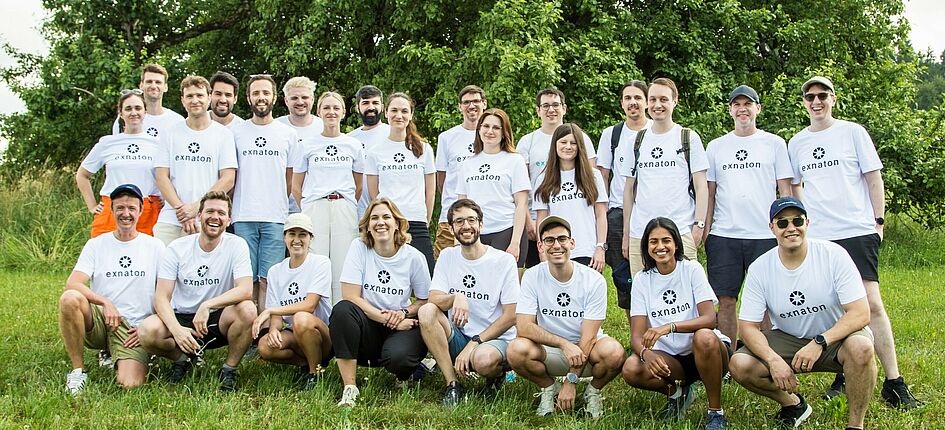
The Exnaton team has successfully completed its Series A financing round. Image: zVg/Exnaton AG
News
Zurich – The Swiss Power-to-X Collaborative Innovation Network (SPIN) has reviewed and consolidated the safety standards for methanol to enable the quantity threshold in the Major Accidents Ordinance to be raised to 20 tons. The standards define safe methanol production, storage and processing throughout Switzerland.
(CONNECT) According to a press release, the Swiss Power-to-X Collaborative Network has consolidated the Swiss methanol safety standards together with the Federal Office for the Environment (FOEN) and the Powerloop association. As a result, the quantity threshold for methanol in the exemption list of the Major Accidents Ordinance was raised from 2 tons to 20 tons as of 1 October 2025.
Raising the volume threshold reduces administrative hurdles for the use of renewable methanol for synthetic fuel production. The consolidated standards ensure a high level of safety for people and the environment and range from training, protective equipment, storage, fire and explosion protection to environmental and emergency management. They apply to companies of all sizes.
"The industry has taken responsibility here and shown that voluntary self-regulation can work. The consolidated standards create planning security for companies that use (green) methanol as the energy source of the future and support the development of Power-to-X technologies in Switzerland," Peter Metzinger, Co-Managing Director of SPIN, is quoted as saying in the press release
Renewable methanol is regarded as one of the most important raw materials for the production of renewable synthetic fuels of the future, but is toxic even in small quantities and is highly flammable with a flash point of 10 degrees Celsius, according to SPIN.
The Swiss Power-to-X Collaborative Network is the network of Swiss Power-to-X networks. The aim of the association is to accelerate the 100% supply of renewable energies in Switzerland and worldwide and to achieve at least net-zero greenhouse gas emissions (especially CO2) by 2050. ce/yes

The quantity threshold for methanol in the list of exceptions in the Hazardous Accidents Ordinance has been raised from 2 tonnes to 20 tonnes as of 1 October 2025. zVg/SPIN Swiss Power to-X Collaborative Innovation Network
News
Zurich – The Technopark Zurich Foundation has appointed Marcel Gurrath as the new CEO of Technopark Zurich. The real estate expert is following in the footsteps of Karin Looser, who has managed the Technopark since 2013.
(CONNECT) Technopark Zurich is getting new operational management: Marcel Gurrath will take over as CEO from Karin Looser in October, the Technopark Zurich Foundation announced in a press release. The 42-year-old real estate expert is "returning to the Swiss innovation landscape" after several months of traveling around the world. Prior to this, Gurrath most recently worked for Livit AG.
In the press release, the new CEO will focus on the strategic development of the Technopark and strengthening its innovative power. In addition, Gurrath is committed to increasing capacity utilization and efficiency as well as digitizing services and processes. Technopark Zurich is "a unique place where ideas become reality", the new CEO is quoted as saying in the press release. "Together with a strong team and a committed community, I want to continue on this path and provide new impetus for this location as a unique driver of innovation."
After more than twelve years as operational manager of Technopark, Karin Looser wants to devote herself to "new personal goals and a professional reorientation", according to the press release. She will therefore be leaving the Technopark at the end of October. The press release cites extensive modernizations, the integration of the foundation, real estate management and event management as well as the opening of the AI Startup Center as milestones during her many years in office. ce/hs
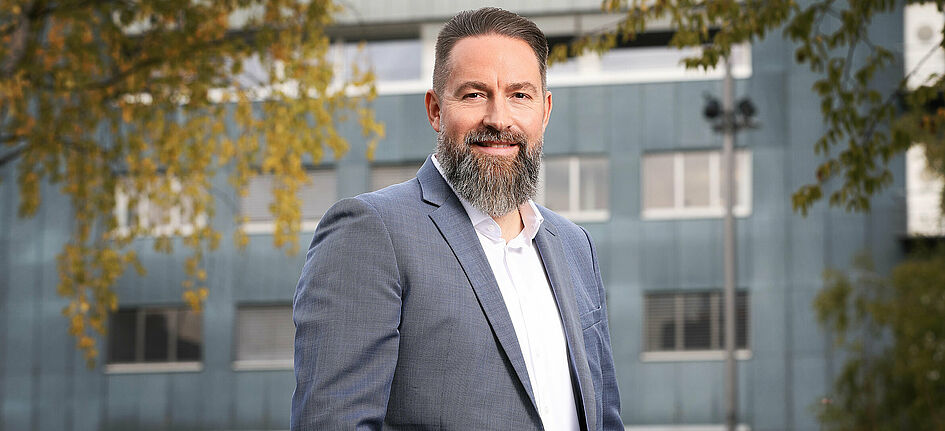
Marcel Gurrath becomes the new CEO of Technopark Zurich. Image: zVg/Technopark Zurich Foundation
News
Zurich – Anevo has completed a pre-seed financing round. With the support of several investors, the Zurich-based start-up intends to further develop its automation platform for real estate.
(CONNECT) Zurich-based Anevo AG has successfully completed a pre-seed financing round. According to a press release, investors such as the Schwyzer Kantonalbank Innovation Foundation, Hohle Gasse AG and angel investors Dominik Grolimund and Reto Lämmler were involved in the financing round.
The spin-off of the Swiss Federal Institute of Technology in Zurich (ETH) has developed an automation platform for real estate. The platform enables companies to automate administrative processes such as bookings, controlling and reporting. In financial controlling, Anevo also uses artificial intelligence to make users' work even easier.
The funds from the pre-seed financing round will enable Anevo to further develop its automation platform. And on the other hand, it should be made accessible to even more customers. ce/ww
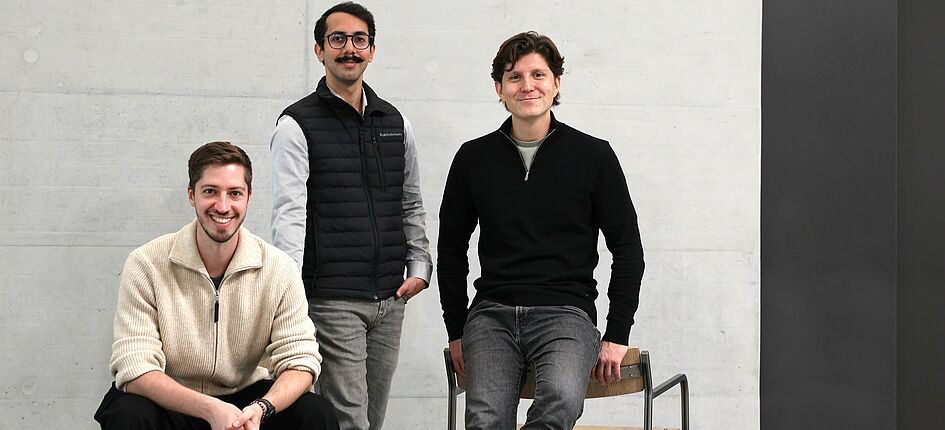
(from left to right) CO founders Tiago Salzmann, Yvan Bosshard and Rafaél Monasterios have completed a pre-seed financing round with their Zurich-based start-up Anevo. Image: zVg/Anevo AG
News
Right in the middle of the AI hype instead of just being there: the Zurich AI Festival’s “Hello, AI!” public event in Zurich on October 2 offered insights into the technology – and answers to the question of what it does. However, the event also showed that everyone can take action themselves.
"If we want artificial intelligence to reflect our own values, we need to actively shape the technology," said Fabian Streiff, Head of the Office for Economy of the Canton of Zurich, as he opened the Zurich AI Festival's "Hello, AI!" public event. And he also motivated the audience: "Switzerland thrives on innovation - and for that we need people who are actively involved in shaping it. So be courageous, be creative."
Creative? Courageous? The thoughts of IT expert Daniel (56) in the audience revolved around even more fundamental questions, such as: What happens to our data? What is AI doing to our society? And shouldn't IT play a greater role in schools?
AI Complements Our Intelligence
The presentations addressed precisely such questions - and encouraged people to take the initiative. Because, according to the founder of the Swiss Healthcare Startups and comedian Fabian Unteregger: "We can't turn back the clock". Just as the car was a turning point in a world of horse-drawn carriages, AI is now changing our lives.
This upheaval also fuels fears - which Unteregger countered with his understanding of technology. He explained that the AI needs enormous computing power just to understand the simple statement "I'm sleeping on the bench". People, on the other hand, know directly that a park bank and not a money bank is meant. That's why AI is "a supplement to our intelligence, not a replacement for it", he says.
The Responsibility Lies With Us
In order for AI to find its way around human language, it needs a "map" with around 13,000 dimensions - and yet it influences us. "AI shapes our language - and therefore also our behavior," emphasized Nathalie Klauser, founder of the AI start-up Intersections.
For example, a study by the Max Planck Institute has shown that since the emergence of AI, certain words (e.g. delve, swift, comprehend) have been used significantly more often - even by people who do not actively use AI. In view of this cultural feedback, Klauser believes it is essential that AI is built in such a way that it does not harm us - and society must ensure this: "In the end, we humans are always responsible."
AI must be technically robust, legal and ethically justifiable. Tools such as Goblin, an AI that helps neurodivergent people to tackle tasks - such as spring cleaning - in a structured way, show that this is possible. At the same time, however, there are also ethically problematic issues. Logistics service provider Planzer, for example, optimized its routes with AI. The result: employees no longer had time to go to the toilet.
It Does Exist – the “Good” AI
Apertus proves that artificial intelligence that meets legal and ethical values is possible. The AI developed by Swiss universities is the first system to fulfill the European "AI Act" - and thus also the criteria that Klauser demands: Control, integrity, transparency and participation.
"With Apertus, we are contributing to the research and development autonomy of our location," emphasizes researcher Imanol Schlag. Unlike the applications of large AI companies, Apertus is not profit-oriented. This is why the researchers were able to base their development on the interests of society.
And so even a piece of Swiss identity has a place in the AI: Apertus also "speaks" a little Swiss-German. Nevertheless, it is a model for the world: "The data used reflects the diversity of the internet - around 40 percent of the training data is not in English."
Young People Lead the Way With Their Own AI Projects
Swiss youth prove that AI is not just a tool for research labs or tech giants: in the AI Challenge, schoolchildren dedicated themselves to developing their own AI applications - and received awards for their efforts.
Mitul and Tanish developed the "AI Personal Trainer" and won the "AI for Good" category. The software helps with rehabilitation exercises - making physiotherapy accessible to everyone.
Levin won the "Creative Coding" category with "Mentis", a software program that sorts your own notes and links old ideas with new ones in order to structure your thoughts more clearly. Levin has learned a lot: "My view of AI has changed: I am positively surprised, but - because I now understand it better - also a little disenchanted."
AI Challenge 2025
The challenge is organized by the ETH AI Center in cooperation with the Office for Economy, Canton of Zurich, and the Cantons of Schwyz and Zug. This year, almost 100 young people between the ages of 13 and 19 took part. Between January and August, they translated their ideas into code with the help of doctoral students from the ETH AI Center.
The finalists were:
Everyone Has Ideas
Levin also won over Asel-Maria (48) with his project. She attended the event because she wanted to understand AI - which is scary to her - better. Although her fears have not been allayed, she finds programs like Mentis particularly helpful and important for young people.
And spontaneous ideas also emerged from the audience: for example, a spreading aid, a matching tool for true love, a chemistry assistant or an intelligent photo album.
The message of the event was clear: AI affects us - and we can all help shape it.

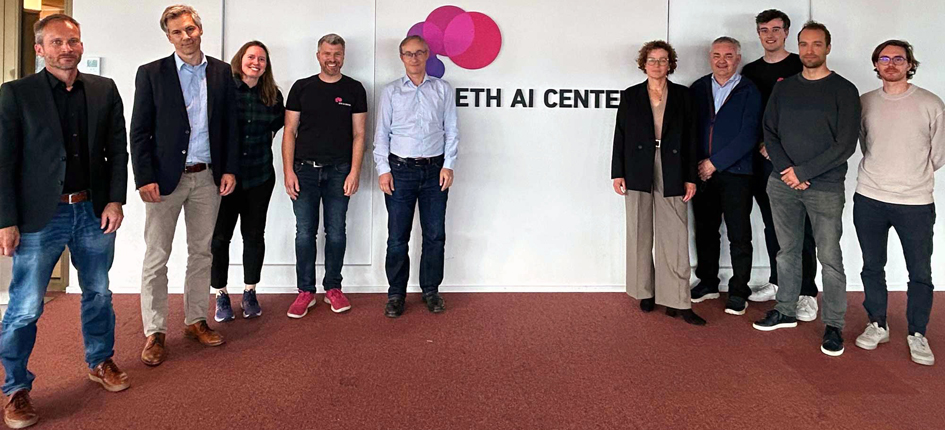
Group photo of all finalists and jury members of the AI Challenge 2025 at the Zurich AI Festival – a strong sign of the innovative spirit of young talent in Switzerland. Source: Bo Yann

Fabian Unteregger explains how language models such as ChatGPT work with humour and vivid examples. Source: Bo Yann

Comedian and doctor Fabian Unteregger combines humour and science to inspire audiences about the possibilities and limitations of artificial intelligence. Source: Bo Yann

Nathalie Klauser discusses social responsibility in dealing with artificial intelligence. Source: Bo Yann

Nathalie Klauser, founder of AI start-up Intersections, talks to presenter Kathrin Hönegger about ethical issues and responsibility in artificial intelligence at the Zurich AI Festival's public event "Hello, AI!". Source: Bo Yann

At the "Hello, AI!" event, researcher Imanol Schlag explains why Switzerland is developing its own AI models with projects such as Apertus in order to strengthen autonomy, transparency and European values. Source: Bo Yann

Juror Thomas Fuchs addresses the participants of the AI Challenge 2025. Source: Bo Yann

Mitul and Tanish won the "AI for Good" category of the AI Challenge 2025 with their project AIPT – AI Personal Trainer. The prize was presented at the Zurich AI Festival. Source: Bo Yann

Levin Niederer from Zurich wins the AI Challenge 2025 in the Creative Coding category with his application "Mentis". The prize was presented by juror Daniel Stüssi. Source: Bo Yann

Thibault from Fribourg receives the special prize in the AI Challenge 2025 for his thesis entitled "Trend Forecasting". The prize was presented by jury member Markus Müller. Source: Bo Yann

The audience eagerly follows the presentations at the Zurich AI Festival's public event "Hello, AI!". Source: Bo Yann
News
Zurich/Eschenbach SG – From spring 2026, the Hallenstadion Zurich will only use fully compostable disposable tableware. This is made possible by a cooperation with Bioloop from Eschenbach. Hallenstadion AG expects the amount of waste to be incinerated to be reduced by 75 percent.
(CONNECT) The Hallenstadion Zurich wants to produce soil from disposable tableware in future. The multifunctional indoor venue will only use fully compostable disposable tableware from spring 2026, Hallenstadion AG announced in a press release. "We don't just want to reduce waste, we want to create a closed cycle," Phillip Musshafen, CEO of the stadium operating company, is quoted as saying. "Our crockery is turned back into soil, making a visible contribution to sustainability."
The Hallenstadion Zurich has teamed up with Bioloop AG from Eschenbach for the project. Founded in 2024, the company produces disposable tableware made from synthetic polyester, which is obtained from renewable raw materials such as corn, sugar cane or sugar beet. At 46.3 grams per unit, the Bioloop cups made from this type of PLA produce significantly less CO2 than the polyethylene terephthalate (PET) cups previously used in the Hallenstadion Zurich, which had a footprint of 89.1 grams of CO2. But they are also more sustainable than reusable cups, which produce 53.4 grams of CO2 per unit.
Appropriate containers will be set up in the Hallenstadion for the collection of used cups, cutlery, plates and napkins. In the nearest aerobic composting plant, microorganisms then process the PLA dishes into nutrient-rich soil within three to six months. The Hallenstadion receives around 500 five-liter bags of earth back from this process every year. It is not yet clear where the earth will be placed. Maybe one day you'll even be able to buy a Christmas tree that has grown in Hallenstadion soil," says Musshafen. ce/hs

From spring 2026, only compostable disposable tableware will be used at the Hallenstadion Zurich. The picture shows the foyer of the stadium. Image: zVg/Hallenstadion AG
News
Zurich/Ecublens VD/Geneva – Four female scientists from the University of Zurich, the Swiss Federal Institutes of Technology in Zurich and Lausanne and the University of Geneva have been awarded the Swiss L’Oréal – UNESCO For Women in Science prize. This is in recognition of their outstanding research results.
(CONNECT) On October 29, 2025, four female scientists will be honored for outstanding research results at the ZKO Zurich Chamber Orchestra in Zurich. The Swiss L'Oréal - UNESCO For Women in Science 2025 prize is awarded by L'Oréal Switzerland together with the Swiss UNESCO Commission and the Swiss Academy of Engineering Sciences (SATW), according to a press release. The prize is endowed with CHF 25,000 in funding.
The prizewinners are biologist Jana Ordon from the University of Zurich (UZH). She is being honored for her research on the interaction between plants and microbes, based on genetic, molecular and biochemical approaches. The findings on pathogen resistance could contribute to more resilient plant production.
The geodesist Annelies Voordendag from the Swiss Federal Institute of Technology in Zurich (ETH) is being honored for her combination of advanced geodetic methods with glaciological field research. A terrestrial long-range laser scanning system can be used to measure glacier movements and register climatic influences.
Giulia Santoni from the Swiss Federal Institute of Technology Lausanne (EPFL) is being honored for her neuroscientific research and the creation of 3D brain models. Their findings could be used to expand our understanding of the human brain and develop personalized therapies for neurological diseases.
Astronomer Mengyuan Xiao from the University of Geneva is researching the origins of ultra-compact galaxies in the early universe and providing important insights into galaxy formation.
"The launch of 'For Women in Science' in Switzerland this year is a strong statement of our unwavering commitment to the advancement of female leaders," Claire Dieudonné, Country Coordinator & Market Director Consumer Products at L'Oréal Switzerland, is quoted as saying in the press release. "This program is much more than an award ceremony; it is our active contribution to overcoming the common challenges that hold women back in research." Gabriela Tejada, Vice-President of the Swiss Commission for UNESCO, sees the program as strengthening the "framework conditions that allow women equal access and opportunities in the scientific community". ce/ww

(from left to right) Dr. Jana Ordon (University of Zurich), Dr. Giulia Santoni (EPFL in collaboration with UNIGE), Dr. Annelies Voordendag (ETHZ), Dr. Mengyuan Xiao (UNIGE) are the 2025 ‘For Women in Science’ award winners. Image: L'ORÉAL Austria, Germany, Switzerland